
AI | Art | Intent
It’s no secret that Real Good AI is determined to keep human creativity at the forefront when it comes to AI and innovation because well…human made stuff has a level of intention that AI can never replicate. We’re always looking for ways to support human creativity, whether it’s promoting STEAM (Science, Technology, Engineering, Arts, and Mathematics), our coloring pages gallery, and (coming soon) Stories about AI by Humans (always be plugging gamers). So why do we care so much about centering real people making real art?
Well, a recent study from Nature said “AI is capable of creative literary products, though it is not as masterful as those produced by creative humans” (Alshammari et al., 2025). Take that with a grain of salt though, the researchers only looked at two plays. Basing a "human vs. robot" verdict on two scripts is like saying you understand all of sports because you saw Remember the Titans and The Sandlot once. Even in that tiny study the data shows, while AI could copy the structure of a story, it was average. AI can make bad writers better, but a truly great work? That requires the deft hand of a true artist.
If you want more rigorous evidence (I did), look at this much larger study of nearly 300 writers in Science Advances. The study found that AI is a creativity crutch. It helps people who aren't great writers get good enough results, but it makes everyone’s work look the same. “This dynamic resembles a social dilemma: With generative AI, writers are individually better off, but collectively a narrower scope of novel content is produced.” (Doshi, Hauser 2024) It kills the weird, unique stuff that is found in the messy process of being creative.
After all, creativity is a cavern of mistakes. Every artist who draws perfect hands has a mountain of poorly drawn ones upon which they stand. Every writer has a black hole of drafts hidden in a filing cabinet haunting them. Every Filmmaker, every Sculptor, every Architect… the list is endless. There are probably translators out there who cringe at some bad translation they did once.
But you know what happens when it's AI that makes the mistake? You can blame it on the chatbot. No one thinks less of YOUR PERSONAL intelligence when it's the AI that messed up.
If I draw a hand with six fingers, I’m a bad artist. If an AI does it, “LOL LOOK THE COMPUTER CAN'T DRAW HANDS!” Research shows that we use these tools as a shield; they protect our egos from the cringe of being a beginner. “Individuals who view AI less experienced than humans exhibit stronger negative emotions toward human errors.” (Qin et al., 2025) It’s safer because at the end of the day, it's just a computer doing Mad Libs and a human should know better.
You don't have to learn all of the icky things and make all of the cringy mistakes that go into caring about something so much that you decide to do it yourself. You can have it now! Screw all of that VFX and Dev time! I can make a movie RIGHT NOW with all of these prompts! It’s Good Enough. Why spend months building a literal VFX render engine in your home bathroom, Markiplier style, when you can just prompt a video into existence?
Because, the effort is part of the art.
It probably comes as no surprise that AI has had a profound impact on creativity since becoming mainstream. Generative AI changes creativity, which, if the data wasn’t stolen and aggregated without consent, would be reason to celebrate (Zafar et al., 2025). So why isn’t it?
The commodification of arts and humanities.
We attached a monetary value not to the labor required, but to the aesthetic value of the end result, the output. The system we exist in promotes the virtues of the shortest time taken, to produce the most aesthetically pleasing thing, for the least amount of money possible.
And before the artists get high and mighty about how AI Art cannot be art because it lacks intention, all of us have done work that lacked intentionality and simply followed the prompts of an employer who shot down any methods of our own personal bias within a project. The only difference is that the AI is unable to complain about it later.
But what about the tools that already exist? Dr Min Priest mentioned in “A Brief History of AI” that AI and Machine learning have been around for decades. That means AI has been quietly improving the lives of creatives for a long time before some marketing department got their hands on the term and decided suddenly it was gonna do everything. (All it makes are word salads and those won’t feed me.) But these tools aren’t the enemy of the artist and it’s not a far leap to see how and where we are already feeling the impacts of AI in the Arts and Humanities.
So if the science says AI is good enough at the basics; what is so great about Human Art anyway?
Intent.
Why was the art made?
Who made it?
What is it trying to convey?
Where and when was it created?
Is it political?
Is it informative?
Is it none of those things?
Did the artist break the rules in a way that enhanced the final product?
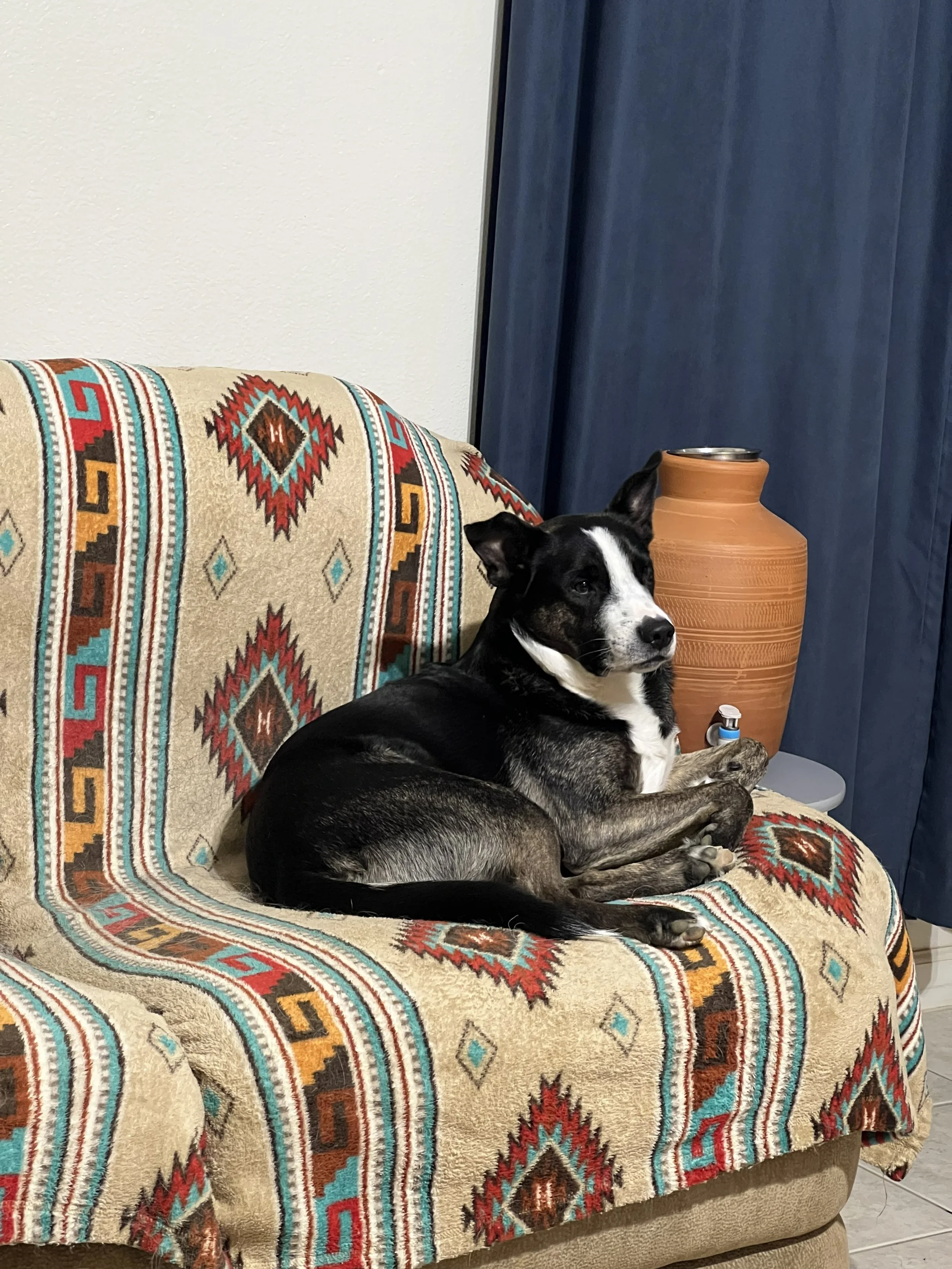
Why were the curtains blue?
Why did the writer choose to point out that they were blue? Make the decision to point out THOSE blue curtains IN THAT ROOM? The reader can visualize everything else about the room differently, but EVERYONE will imagine the curtains in some shade of blue. In human hands every detail is a choice, and those choices create meaning that a prediction machine simply cannot. And if the movie adaptation makes them orange, someone will make a YouTube video yelling about how the directors HAD ONE JOB to make the curtains BLUE.
Don’t let the “it’s not that deep” crowd convince you that the curtains were just blue. The reason for them being blue might be stupid, but it is a reason. We care about the blue curtains because we care about the person who decided they had to be there. Art is a fireside conversation on a clear night; without intent, you’re just listening to a dial-up modem yell at you.
The tension between human intent and machine output means we need a better way to talk about how we work with these tools. Just like the Society of Automotive Engineers (SAE) established levels for self-driving cars, we use the REAL Rating — which stands for Reported Engagement with AI Level:
Level 0 - No AI: No intentional AI usage. 100% human labor. You aren’t even using the "sneaky" AI, like automatic green screens or AI transcription. If the software has AI features, you’ve turned them off.
Level 1 - Automation: No "Generative" AI. You’re using tools to clean things up like fixing typos, filtering out background hiss, or adding captions. It’s machine learning, but it isn’t "creating" anything new.
Level 2 - Brainstorming: The AI is your digital whiteboard. You can use it to organize thoughts, outline, or get feedback. But there is a hard rule: No copy-pasting. If the AI wrote it and it’s in the final piece, you’re not at Level 2 anymore.
Level 3 - Moderate AI: The AI starts helping with the "building blocks." Maybe you used generative fill to fix a tiny corner of a photo or used AI to enhance your voice. If any AI-generated content even edited or traced makes it to the final product, it’s at least this level.
Level 4 - Major AI: The AI is making big decisions. This is more than just "cleaning up" the work would be totally different without the machine's input. If a human had helped you this much, you’d have to give them a co-author credit.
Level 5 - Full AI: The AI did the heavy lifting. Whether it's a one-sentence prompt or a complex set of instructions, if you’re copy-pasting the output with minimal changes, the AI did the work.
If we treat AI like a self-driving car, we have to decide when we’re willing to take our hands off the wheel. As you move up the REAL Rating scale, you have to ask yourself: at what level does it stop being your art? When are you just a “prompt manager?”
As a writer and novelist, I can imagine a future where an AI helps me keep track of my characters and geography without the added step of having to fill it out myself. I want a tool that reminds me of my character's eye color; not one that decides why they’re crying. Something that can recall where I left a small opening to explain some future foreshadowing. And did I accidentally change my character’s height? Yeah, yeah, I can go back and read all of it and put it into a program myself and spend time on the logistics when really I just wanna write.
The danger lies in skipping straight to Level 4 or 5 where the AI produces the entire "work" with minimal or no human intervention and pretending the result has the same weight as a human's "Level 0 - 2" labor. As that Science Advances study warns us, leaning too hard on the AI crutch makes all our stories start to sound the same.
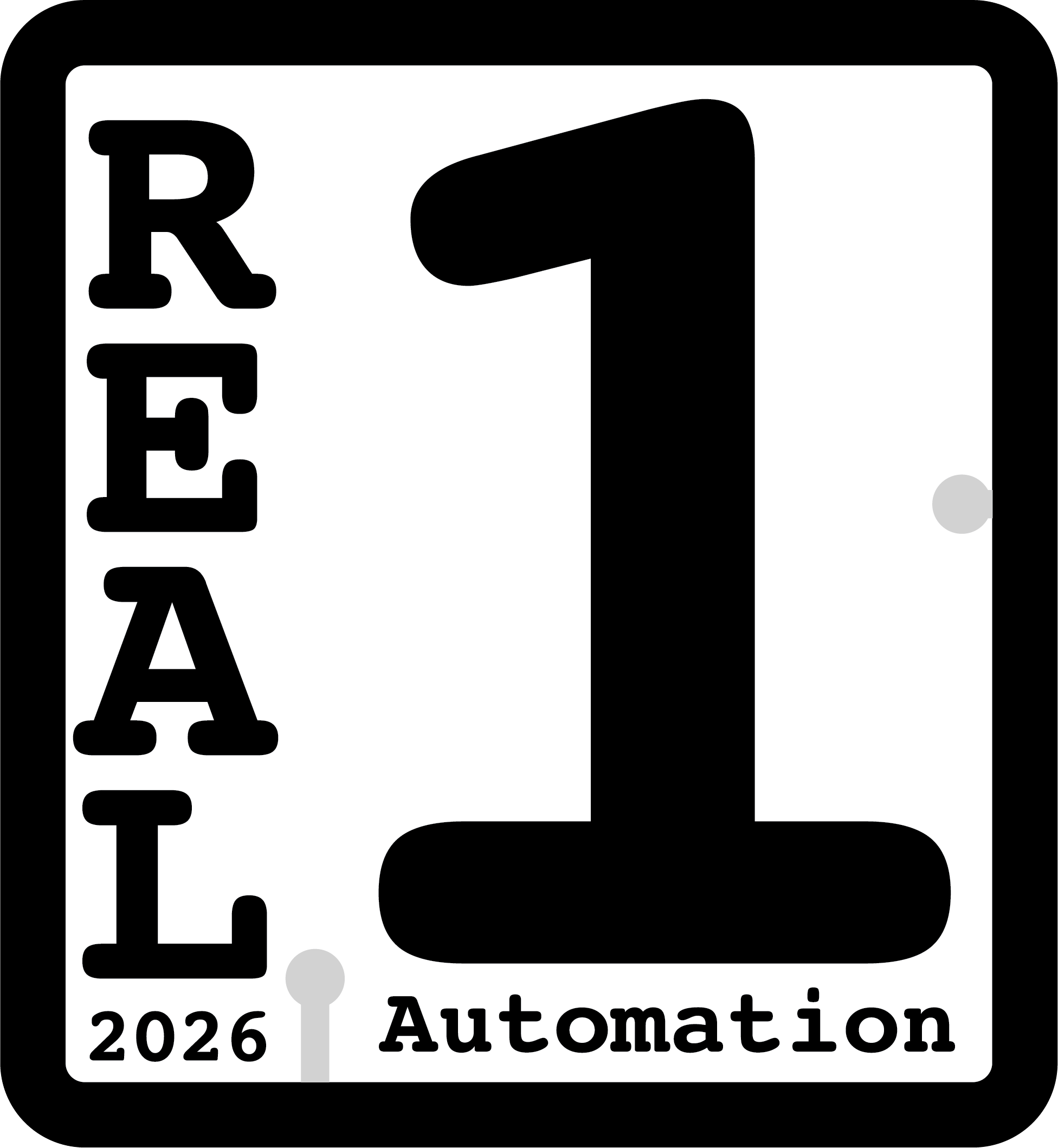
We’re REAL1s cause ya goil can’t spell for sdhit
The Works? Cited.
Elias, S., Alshammari, B.S., Alfraidi, K.N. et al. “Rethinking literary creativity in the digital age: a comparative study of human versus AI playwriting.” Humanit Soc Sci Commun 12, 689 (2025). https://doi.org/10.1057/s41599-025-04999-2 (https://www.nature.com/articles/s41599-025-04999-2#Sec1)
Doshi AR, Hauser OP. “Generative AI enhances individual creativity but reduces the collective diversity of novel content.” Sci Adv. 2024 Jul 12;10(28):eadn5290. doi: 10.1126/sciadv.adn5290. Epub 2024 Jul 12. PMID: 38996021; PMCID: PMC11244532. https://pubmed.ncbi.nlm.nih.gov/38996021/ (https://www.science.org/doi/10.1126/sciadv.adn5290)
Ying Qin, Wanhui Zhou, Bu Zhong, “Why human mistakes hurt more? Emotional responses in human-AI errors,” Computers in Human Behavior: Artificial Humans, Volume 6, 2025, 100238, ISSN 2949-8821, https://doi.org/10.1016/j.chbah.2025.100238. (https://www.sciencedirect.com/science/article/pii/S2949882125001227)
Muhammad Bilal Zafar, Hassnian Ali, Talha Yasin, “Reimagining human creativity and learning in the age of generative AI: A multi-method meta-thematic synthesis,” Next Research, Volume 2, Issue 4, 2025, 100802, ISSN 3050-4759, https://doi.org/10.1016/j.nexres.2025.100802. (https://www.sciencedirect.com/science/article/pii/S3050475925006694)
Priest, Min. “A Brief History of AI.” Real Good AI, 2025-09-23, https://www.realgoodai.org/newsletter/a-brief-history-of-ai.
Real Good AI. “REAL Rating.” Real Good AI, 2026, https://www.realgoodai.org/real-rating.
